
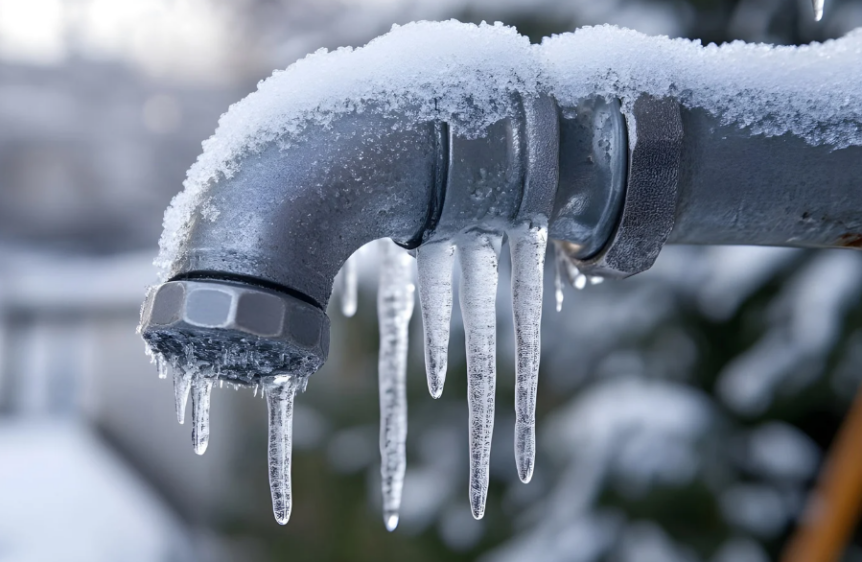
Winter brings cold, beautiful mornings, but also the risk of frozen pipes. Frozen pipes can burst, causing costly water damage and major headaches. Fortunately, there are practical steps you can take to protect your home. Check out our guide below!
Questions? Reach out to one of our knowledgeable insurance agents. We’re eager to set you up with the right coverage and rate!
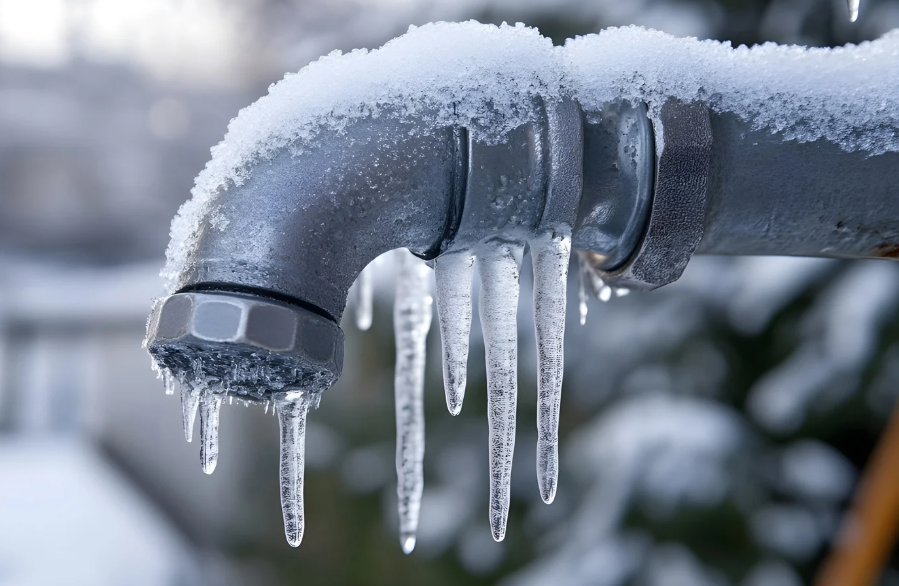
Why Frozen Pipes Are a Problem
- A frozen pipe can burst and flood your home.
- Repairs can be expensive, and insurance coverage may be limited if neglect is involved.
- Even small leaks can lead to long-term damage like mold or structural issues.
Top Tips to Prevent Frozen Pipes
- Insulate pipes in basements, attics, crawl spaces, and exterior walls.
- Let faucets drip during extreme cold to keep water moving.
- Seal leaks and cracks where cold air can reach pipes.
- Keep garage doors closed if pipes are inside.
- Maintain a consistent home temperature; don’t let it drop below 55°F.
What to Do if Pipes Freeze
- Turn off the water at the main valve immediately.
- Thaw carefully with warm towels or a hairdryer; never use open flames.
- Call a licensed plumber if the pipe has already burst or you’re unsure.
Preventing frozen pipes is easier (and cheaper) than repairing them. By taking these simple precautions, you can avoid water damage and protect your home.
Want to know if your insurance covers frozen pipe damage? Contact Cornerstone Insurance Agency LLC’s insurance agents to review your policy and make sure your home is fully protected.
This article is for informational purposes only. You should not act based on this information without first consulting with your insurance agent; if you would like a quote from a Cornerstone Insurance Agency licensed agent, contact us. We disclaim all liability for actions taken or not taken by you based on the contents of this article which is provided “as is.” Cornerstone makes no representation that this content is error-free.